Thursday, March 26, 2020

We Talk to the Trees!


Shalom Shiraniks!

What a fun few weeks we have had, and there's more to come!  Right now we are gearing up for our music video (yay!!), beginning to explore popular songs to parody.  Everyone had "homework" this week to bring in the names of any songs you think might be a good fit.  (Parents, feel free to chime in!).  Here are a few notes on what we have been, and will be up to this month:


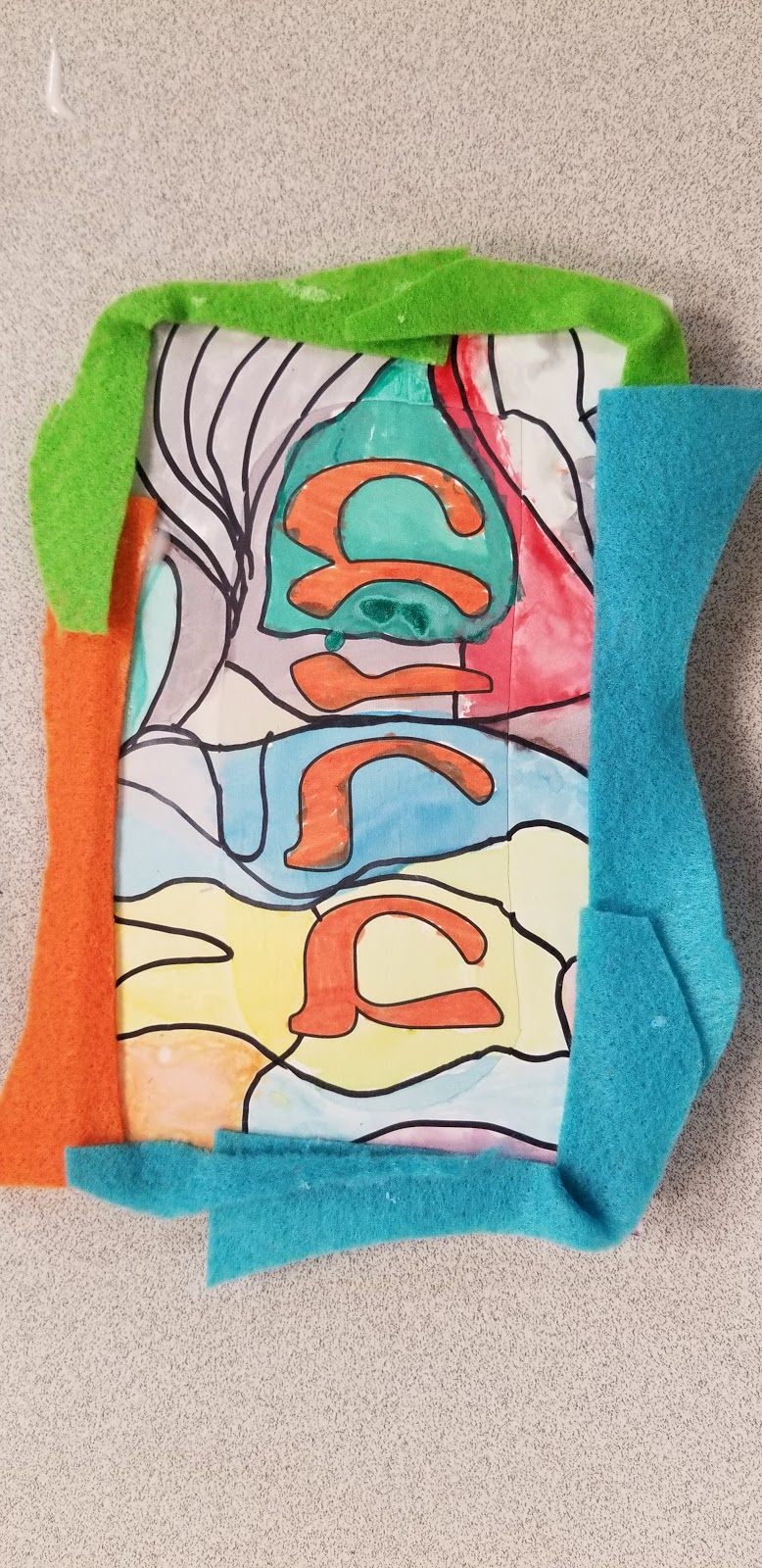
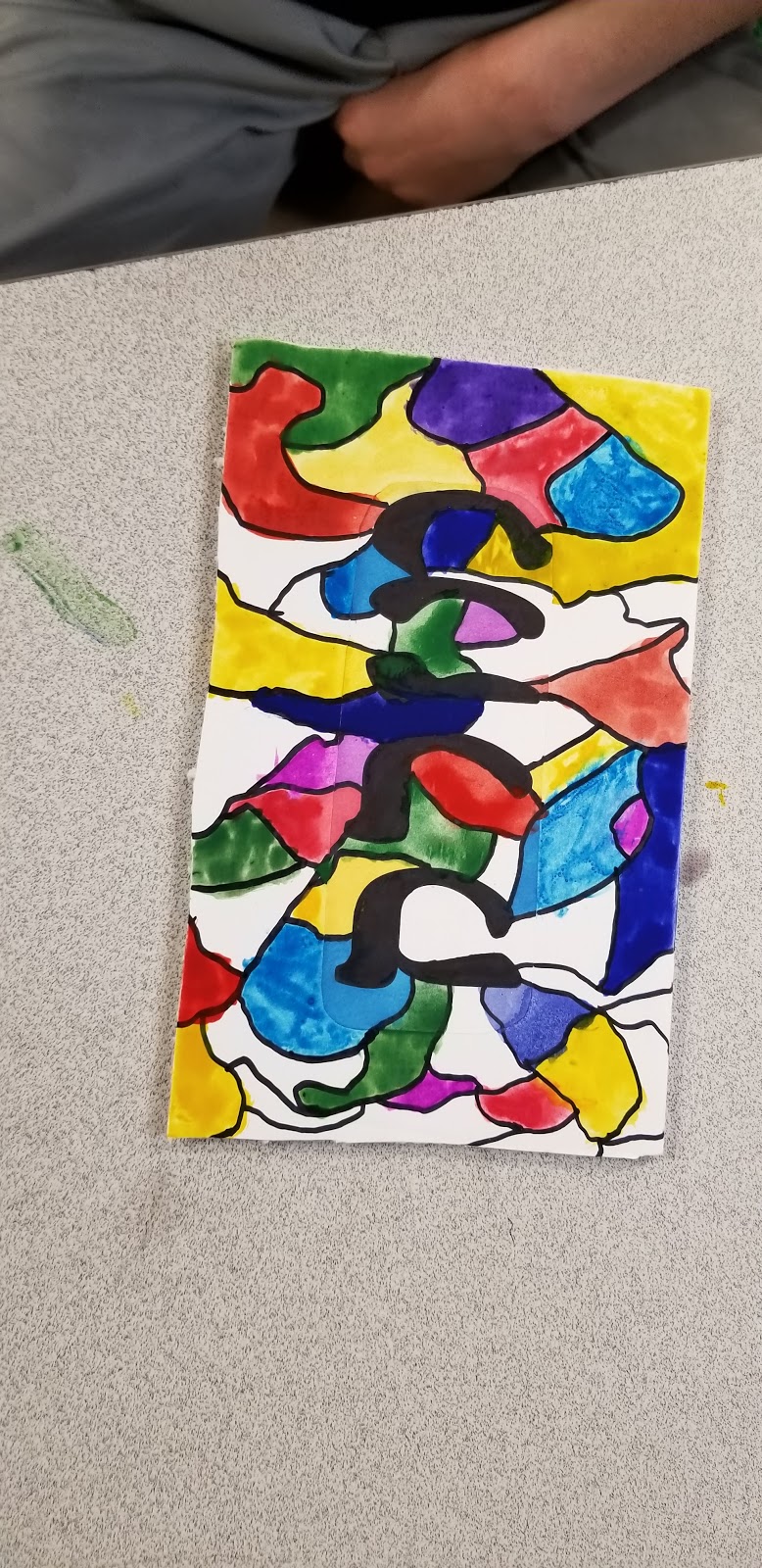
We Talk to the Trees However, before we embarked on our music video, we took a little break to celebrate Tu Bishvat, with a  very windy "walkabout."  We paused in various places around the Isaiah campus to take notes on various trees that we observed, sketching each tree for reference later.  We came inside and wrote tree poetry in various forms, including quatrains, chinquapins and haiku.  The following class, we created "tear art"  tree illustrations for the poems, based upon the students' sketches of the trees on Isaiah's campus.


Jewpardy
Last week, the students played a "Jewpardy" game that we created with questions posed by each of the classes. 


Lights, Camera, Action!
Now that we have began working on the 2020 Shira Music Video, things will start moving quickly.   We are currently in the process of choosing a song and a theme, and will begin writing lyrics and storyboarding next week, after Sunday's Purim lesson. Production should begin in two weeks, and we hope to wrap up recording just before Passover and filming soon thereafter. 

Purim Fun
Finally, Purim is around the corner, and we are looking forward to the annual J Quest Purimshphiel, featuring the teachers and clergy this Sunday.  If you want a couple of resources, Sefaria is an app that you can download for Jewish texts (i.e. the entire Tanakh!).  It has a virtual granger feature that is really fun!  Also, check out Ritualwell.org for Purim blessings and ideas.  

There's a Blessing for That!
Finally, although we all pray that it may not affect us or our families, it can't hurt to be vigilant against the Corona virus.  Avoiding touching your face will help, but washing hands regularly for 20 or more seconds is an easy and most effective tool for staving off germs and viruses.  Of course, being Jews, we have a blessing for that!  The following is a prayer from Ritualwell.com that, when recited while washing hands, will ensure that you was for the prescribed time.  

A Blessing For Washing Hands During a Pandemic


woman washing hands with soap
As we wash our hands
We pray,
Blessed is the Soul of the Universe,
Breathing us in and breathing us out.
May our breaths continue
And our health and the health of all
Be preserved
In this time of sickness and fear of sickness.
Holy Wholeness,
We take as much responsibility for this as we can
By observing the obligation to wash our hands
Thoroughly:
For as long as it takes to say this prayer.
Amen
בָּרוּךְ אַתָּה הָ׳ אֱלֹהֵינוּ מֶלֶךְ הָעוֹלָם אֲשֶׁר קִדְּשָׁנוּ בְּמִצְוֹתָיו וְצִוָּנוּ עַל נְטִילַת יָדַיִם

Tuesday, January 28, 2020

Hava Heaven!

Shalom Shiraniks!

Pretty much everyone in America, Jewish or not, has heard (or at least heard of) the song Hava Nagila.  We know that at every bar or bat mitzvah, wedding or other Jewish simcha, Hava is a time-tested tradition.  But where did Hava actually come from?  Is it an ancient melody?  Why has it become so enmeshed with the American Jewish identity? 

We spent a few class sessions watching a wonderful documentary about Hava Nagila called "Hava Nagila:  The Movie."  I highly recommend viewing it at home - it can be rented or purchased on YouTube at: https://www.youtube.com/watch?v=Ws1k9OPZous

The students learned how to do the Hora, they listened to many versions of and learned to sing Hava Nagila, and then they ultimately created their own parody version of Hava to show what they learned!


By the Rivers of Babylon - the Mizrahim

When the Babylonians destroyed the Temple in Jerusalem ca 586 BCE, it was the end of an era, but also the beginning of a new Edah.  The Israelites were taken as slaves back to Babylon during what became known as the Babylonian captivity. Although some of the group of exiles returned to Jerusalem seventy years later, many stayed in the Middle Eastern diaspora.  This group became the Mizrahi, or "Eastern" Jews.

We have been learning about the culture and music of this dynamic population of Jews, beginning with Psalm 137, which is a lamentation of the Jewish exiles "by the rivers of Babylon."  We learned the song, and even heard the reggae version! 


We learned that the Jews of the Middle Eastern Diaspora developed the distinctive beat that is found in many dance tunes today.  

We called this the "ride the pony" beat (think of the rhythm when you say those words), and we practiced it on our various percussion instruments, many of which are "found" items.


 One of the students' favorite examples of this style is the traditional song "Im Ninalu," performed by Ofra Haza, an Israeli pop star who called upon the musical traditions of her Yemenite background to create a unique blend of eastern and western music that remains popular today. In this video, you can see the traditional musical percussion instrument of the Yemenite Jews, as well as traditional Yemenite costumes.


We wrapped up the unit by listening to, dancing to and evaluating many of the popular "Mizrahit" tunes of contemporary Israel.  There is a wide selection that can be found on YouTube (just type in Mizrahit mix).  Here is one of our favorite new Yemenite Israeli groups, A Wa:


These three sisters pull inspiration from Ofrah Haza's music and their Yemeni Jewish roots, as well as exploring commonalities with their Arab neighbors, including language; the band usually sings in Yemeni Arabic.

Throughout the unit, we witnessed the life and culture of Mizrachi Jews through videos and film, learned new songs and dances, and made origami Torahs to commemorate the first writings of the Torah during the Babylonian Exile. Finally, each student made their own mizrach to hang on the eastern wall of their homes to know which direction to face when praying.


Wednesday, November 20, 2019

Let's Learn Ladino!

Shalom Shiraniks!

Many of you may be familiar with the Hanukkah song "Ocho Kandelikas," and you may also know that it is sung in a language other than Hebrew or English, called Ladino, that sounds a bit like Spanish.  You may even know that this special language is the primary language of generations of Jews that call themselves Sephardim?  However, you might not know that Ladino is NOT just a combination of Spanish and Hebrew, but is a blend of languages from over eight different countries?!
For a quick primer on the history of the Sephardim and their travels, the Shiraniks watched this brief video, all in Spanish! 

We have been learning about the Sephardim, their culture and their music.  This week, the Shiraniks learned a few phrases in Ladino of their own!  Try them on for size, and the next time you are in the situation when you need to say, "Bon Appetit!," try "Kome kon gana!" (KOH-may kon GAH-na), or instead of "Goodbye," try "Sano i rezio!" (SAH-no ee REZ-yo)

IMPORTANT ANNOUNCEMENT FOR ALL SHIRANIKS:  Earn PRIZE POINTS!! Since we have two weeks off until we see each other again, (no classes over Thanksgiving Break!), it is the perfect opportunity to learn some of these phrases at home.  I will be giving prize points for each phrase learned!!
2 points for all phrases except...
5 points for the Ladino version of "Bless You!," which is really long! 

Come prepared to recite your phrase to the class and earn points!!
You must:
1.  Pronounce it correctly
2. Tell what it means

Here are a few more we learned in class:

Ladino Pronunciation Guide
j as in French “bonjour”
h as in English “hot”
dj as in English “joy” 

1. Ijo de ken sos tu?           ?איזו די קין סוס טו

Pronunciation: EE-jo de ken sos tu

Meaning: You are the child of whom?

How to use it: You meet someone, realize you might know people in common, and begin playing Sephardic Jewish geography with the question: “Ijo de ken sos tu?”

2. Haberes buenos!             !חאביריס בואינוס

Pronunciation: ha-BEAR-es BWE-nos

Meaning: Good news!

How to use it: This can be used either to announce good news or as a way to ward off bad news.

Sample uses: You aced your exam and tell you parents: “Haberes buenos! I got an A!”
Or… You find out Nona (grandma) broke her hip and, to ward off the bad news, reply, “Haberes buenos!”

 3. Dezmazalado de mi!         !דיזמאזאלאדו די מי

Pronunciation: dez-ma-zal-A-do de MEE

Meaning: Pity me! I’m out of luck.
Sample use: You haven’t texted me in weeks! Dezmazalado de mi!

4. Djente de piron     גינטי די פירון

Pronunciation: DJEN-te de pee-ROAN

Meaning: The one percent (i. e. rich folks)

Literal translation: “People of the fork”: owning a fork (and not just a spoon) was once a sign of high-class status.

5. Kome kon gana!       !קומי קון גאנה

Pronunciation: KO-may kon GA-na

Meaning: Bon appetit!

Literal translation: “Eat with desire.”
  
6. Engleneate!        !אינגליניאטי

Pronunciation: en-glen-AY-a-te

Meaning: Have fun!

Literal translation: Entertain yourself!

7. Hadras i baranas        חאדראס אי באראנאס

Pronunciation: HAD-ras ee bar-an-AS

Meaning: An outrageously big fuss. Being pretentious and really noisy at the same time.

How to use it: When someone is really making a scene: “Look at all that hadras i baranas!”

8. Bavajadas de benadam         באבאזאדאס די בן אדם

Pronunciation: ba-va-JAD-as de ben a-DAM

Meaning: Human foibles

Literal translation: Stupidities of mankind

Sample sentence: Gossip the bavajadas de benadam. 

9. Bivas, kreskas, engrandeskas, komo un peshiko en aguas freskas! Amen!
ביבאס קריסקאס אינגראנדיסקאס קומו און פישיקו אין אגואס פריסקאס אמן

Pronunciation: BEE-vas, KRES-kas, en-gran-DES-kas, KO-mo un pesh-EE-ko en AG-uas FRES-kas! a-MEN!

Meaning: An elaborate “bless you” after a sneeze (or multiple sneezes)

Literal translation: Live; thrive; grow; like a little fish in fresh water! Amen! 

10. Kaminos de leche i miel!        קאמינוס די ליגי אי מייל

Pronunciation: Ka-MEE-nos de LE-che ee MEE-el

Meaning: Bon voyage!

Literal meaning: May you follow paths of milk and honey 

11. Sano i rezio!        סאנו אי ריזייו

Pronunciation: SA-no ee REZ-yo
Meaning: Farewell!

Literal meaning: May you be healthy and strong 

To show off their new Ladino skills, the students created skits showing how they might use these phrases in real life.  

MUSICAL NOTES

Throughout out unit on the Sephardim, we have been listening to various forms of music from the Sephardic Jews that descend from Spain and Northern Africa.  The students have been learning about the various Sephardic "genres," including the Romancero (romantic ballads, often lamenting a lost love - a metaphor for the lost homeland of Spain), the Cancion and 


Tuesday, November 12, 2019

"The Praying Bunch" Song Parody

Shalom Shiraniks!

You guys are superstars!  Here are the unedited videos from our Sunday recording sessions of your latest hit, "The Praying Bunch."  If we have time, we may add visuals and subtitles, but in the meantime, here are your awesome lyrics and vocals.  You guys rocked this project!

Also, this week, prepare to dive into Sephardic culture.  We will be learning about the Jews from Spain and North Africa, and how their music, language and culture set them apart from their Ashkenazi peers.  If you or your family have Sephardic heritage, and are interested in sharing family stories, memorabilia, songs (especially songs!) that reflect your heritage, please let me know.  It would be great to add to our Sephardic repertoir!

Now, here are those videos:


Wednesday, November 6, 2019

Our Parody is Published!

Shalom Shiraniks!

This week, we worked on our project that shows what we know about the last unit about music and worship in the Tabernacle, Temple and Synagogue.  The students listened to the Brady Bunch theme song (yep, it's an oldie but a goodie!), and came up with their own lyrics to illustrate how the Jews evolved from sacrificing animals at the Tabernacle, First and Second Temples to "sacrificing" prayers today.  Shiraniks, we will be recording these lyrics on Sunday, so please try to be here and prepared to sing!  Here's the song, followed by a video of the original theme song and the karaoke version to practice to:   


The Praying Bunch - Parody of the Brady Bunch Theme
by Shira 2019-20

Here’s the story, of a sanctuary
And a people who pray to God each day
they started...in a tabernacle
the priests showed them the way

Here’s the story, of a Holy Temple
It was permanent with sacrifice each day
They had priests sing...and play the shofar
And it was all okay

Until one day when the Romans wrecked the Temple
We created synagogues and had a hunch
We’d no longer sacrifice but pray with cantors
That’s the way we all became the praying bunch

The Praying Bunch
The Praying Bunch,
That’s the way we became the Praying Bunch.